No Parking Challan in India: Traffic Rules, Fines, Online Checks and What Drivers Should Know
By `Dhaneshwar Sahu
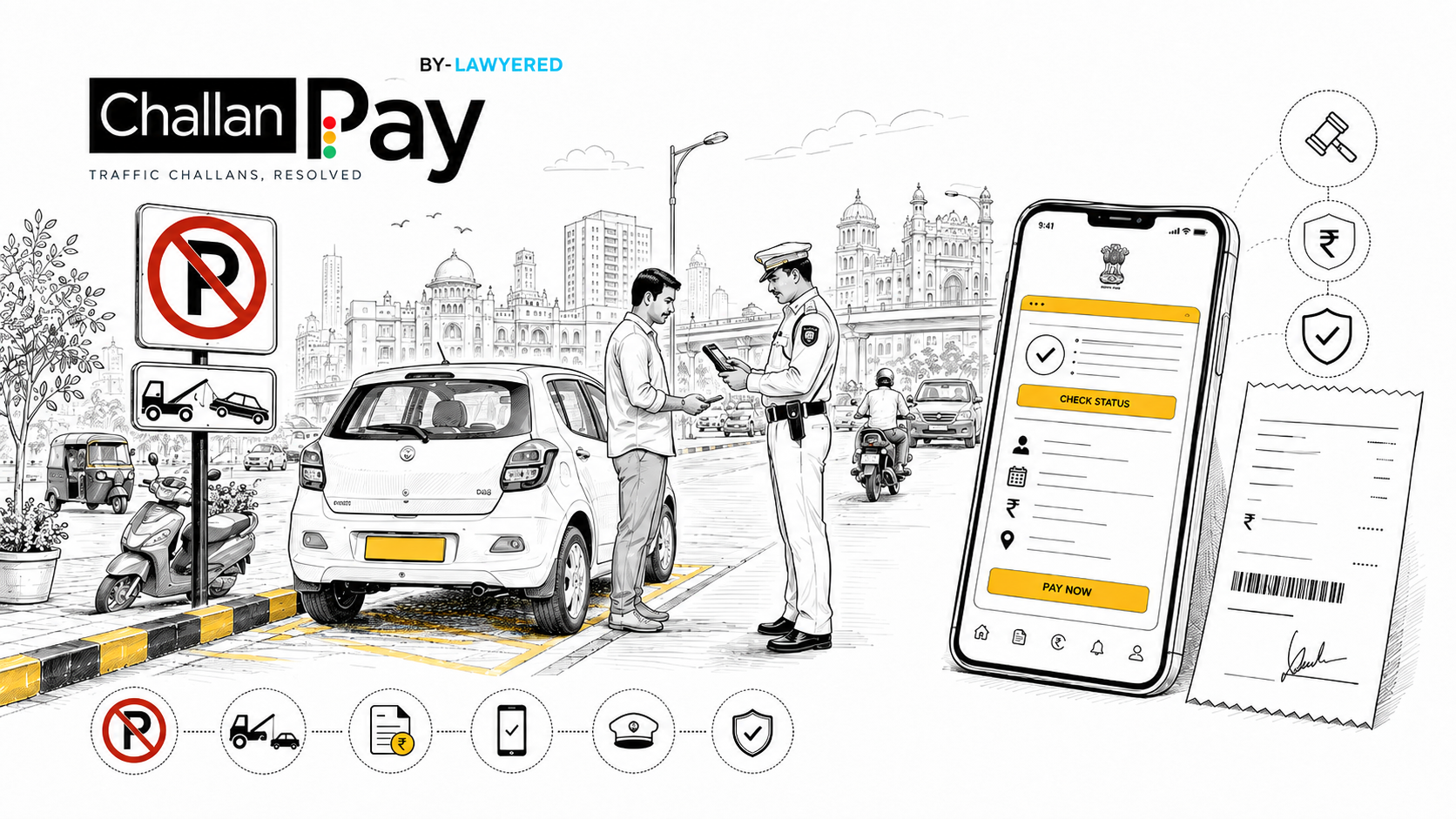
Finding a parking space can be frustrating, especially in crowded cities. But leaving a vehicle in a restricted location, even for a few minutes, can result in a no parking challan. With CCTV cameras, automated number plate recognition, and digital traffic enforcement becoming increasingly common, drivers can no longer assume that a quick stop will go unnoticed.
Understanding traffic rules in India can help vehicle owners avoid unnecessary penalties while making roads safer and more accessible for everyone.
What Is a No Parking Challan?
A no parking challan is a penalty issued when a vehicle is parked or stopped in an area where such activity is prohibited under applicable traffic regulations.
No-parking restrictions are generally introduced to prevent:
- Traffic congestion
- Road blockages
- Pedestrian obstruction
- Accidents
- Emergency vehicle delays
- Disruption near important public locations
Depending on the location and circumstances, traffic authorities may issue a challan manually or through an electronic enforcement system.
Where Is Parking Usually Restricted?
Drivers should always look for road signs, markings, and local restrictions before leaving their vehicle.
Parking may be prohibited near:
- Traffic intersections
- Pedestrian crossings
- Narrow or congested roads
- Emergency entrances
- Fire stations
- Hospital access points
- Bus stops
- School entrances
- Major junctions
- Areas marked as no-parking zones
A common mistake is assuming that the absence of a traffic officer means parking is permitted. Modern enforcement systems can record violations even when no officer is physically present.
How Digital Enforcement Has Changed Parking Rules
Traffic enforcement in India is increasingly technology-driven. CCTV networks and automated systems can capture vehicle registration numbers and record parking violations.
In some locations, enforcement teams may use handheld devices to photograph a vehicle and generate an electronic challan.
This means vehicle owners should take parking signs seriously even when a road appears relatively empty.
What Are the Traffic Rules in India?
Traffic rules cover much more than parking. They establish standards for safe and orderly movement of vehicles and pedestrians.
Some fundamental rules include:
Follow Speed Limits
Drivers must respect the speed limit applicable to the road and vehicle category. Excessive speed can result in penalties and significantly increase accident risks.
Obey Traffic Signals
Drivers should stop at red lights and follow signal instructions. Crossing a red signal can lead to a traffic challan and create dangerous situations at intersections.
Wear Safety Equipment
Two-wheeler riders should use appropriate helmets, while vehicle occupants should use seat belts as required.
Carry Valid Documents
Drivers should maintain the required vehicle documents, including a valid driving licence and registration-related documents.
Avoid Distracted Driving
Using a handheld mobile phone while driving can affect concentration and reaction time and may attract legal penalties.
Follow Parking Restrictions
Vehicles should be parked only where parking is legally permitted. A convenient location is not necessarily a lawful parking location.
What Happens When You Receive a No Parking Challan?
If you discover a no parking challan against your vehicle, start by checking the details.
Look at:
- Vehicle registration number
- Date and time
- Location
- Nature of violation
- Challan number
- Applicable penalty
- Available photographic evidence
If the information is accurate, the appropriate payment or resolution process should be followed.
Keeping the payment confirmation or resolution record is recommended for future reference.
Can a No Parking Challan Be Disputed?
There can be circumstances in which a driver believes a challan has been issued incorrectly. For example, the vehicle number may have been recorded incorrectly, the vehicle may have been elsewhere at the stated time, or there may be an issue with the enforcement evidence.
In such situations, simply ignoring the challan is not advisable.
A driver should:
- Verify the challan information.
- Collect relevant supporting evidence.
- Check the applicable dispute mechanism.
- Submit the complaint or representation through the appropriate authority.
- Seek legal assistance if the matter becomes complex.
The strength of a dispute depends on the facts and evidence available.
Why Ignoring Traffic Challans Can Be Risky
A pending challan should not be treated as an issue that will automatically disappear. Depending on the nature of the violation and applicable procedures, an unresolved matter may lead to further notices, penalties, or administrative and legal complications.
This is particularly important for commercial vehicle owners who manage several vehicles. Multiple pending violations can make compliance management more difficult and potentially affect daily operations.
How to Avoid a No Parking Challan
The simplest solution is to make parking compliance part of your normal driving routine.
Before leaving your vehicle:
- Check nearby parking signs.
- Look for road markings.
- Use authorised parking spaces.
- Avoid blocking entrances or crossings.
- Never obstruct emergency access.
- Follow local parking restrictions.
- Use designated parking facilities where available.
If you are unsure whether a location permits parking, choosing a clearly authorised parking area is safer than taking a chance.
Traffic Rules Are About Safety, Not Just Fines
It is easy to think of traffic rules as a collection of penalties. Their broader purpose, however, is to maintain predictable movement and protect road users.
A vehicle parked at the wrong location can block an ambulance. A car stopped near a junction can reduce visibility. A vehicle obstructing a pedestrian crossing can force people into moving traffic.
Following parking rules therefore has a direct connection with public safety.
When Legal Help Can Be Useful
Most parking violations are relatively straightforward. However, legal assistance may become useful when a matter involves disputed evidence, repeated violations, vehicle towing or seizure, multiple pending challans, or other legal proceedings.
A legal professional can help explain the applicable rules and guide the vehicle owner through the appropriate process.
Final Word
A no parking challan can often be avoided with a simple habit: check the parking restrictions before leaving your vehicle. At the same time, understanding broader traffic rules in India helps drivers remain compliant across different road situations.
As digital traffic enforcement continues to expand, responsible driving requires more than avoiding traffic police on the road. Drivers should follow signs, maintain valid documents, respect parking restrictions, and promptly review any challan issued against their vehicle. Good compliance protects your finances, prevents unnecessary legal complications, and contributes to safer roads for everyone.